
WHOLE-HOME WATER FILTRATION

Whole-Home Filtration for Chlorine, Sediment, Iron, and Other Water Problems

Water problems can look similar while having very different causes.

A chlorine smell, orange staining, cloudy water, gritty particles, hard-water buildup, or an unusual taste can each point to a different treatment need.

That’s why Kinetico of OKC starts with your water before recommending equipment.

We help homeowners throughout Oklahoma City and Central Oklahoma identify what is affecting their water and choose filtration based on the actual conditions at the home.

What Water Problem Are You Seeing?

Chlorine Taste or Smell

You may notice a swimming-pool-like smell, a chlorine taste in your drinking water, stronger odors during a hot shower, or an unpleasant taste in coffee, tea, or ice.

Sand, Grit, or Cloudy Water

You may notice sand or grit in sinks and tubs, visible particles in a glass, sediment settling in containers or toilet tanks, clogged faucet aerators or showerheads, or filters clogging faster than expected.

Orange or Rust-Colored Stains

You may notice orange or reddish-brown stains, rust-colored toilet bowls, staining around sinks and tubs, metallic-tasting water, or water that turns orange or brown after sitting.

More Than One Water Problem

Hardness, chlorine, sediment, iron, odors, and other conditions can occur together.

What Does Water Filtration Do?

Water filtration uses treatment media or equipment designed to reduce specific substances in water. Different filters do different jobs.

There is no single filter that should be assumed to solve every water problem. The right questions are: What is in the water? What needs to be reduced? Which treatment is appropriate for those conditions?

Examples

Different Filters Do Different Jobs

  • Sediment filtration captures suspended particles such as sand and silt
  • Carbon-based filtration can reduce chlorine and related taste or odor
  • Iron filtration can address certain iron conditions
  • Water softening treats hardness minerals such as calcium and magnesium
  • Reverse osmosis provides another type of treatment for drinking and cooking water

Why testing matters

Treatment Should Match the Water

Filtration works best when the system is selected for the actual water conditions, not assumed from one symptom alone.

That helps identify what should be reduced and which treatment approach makes sense for the home.

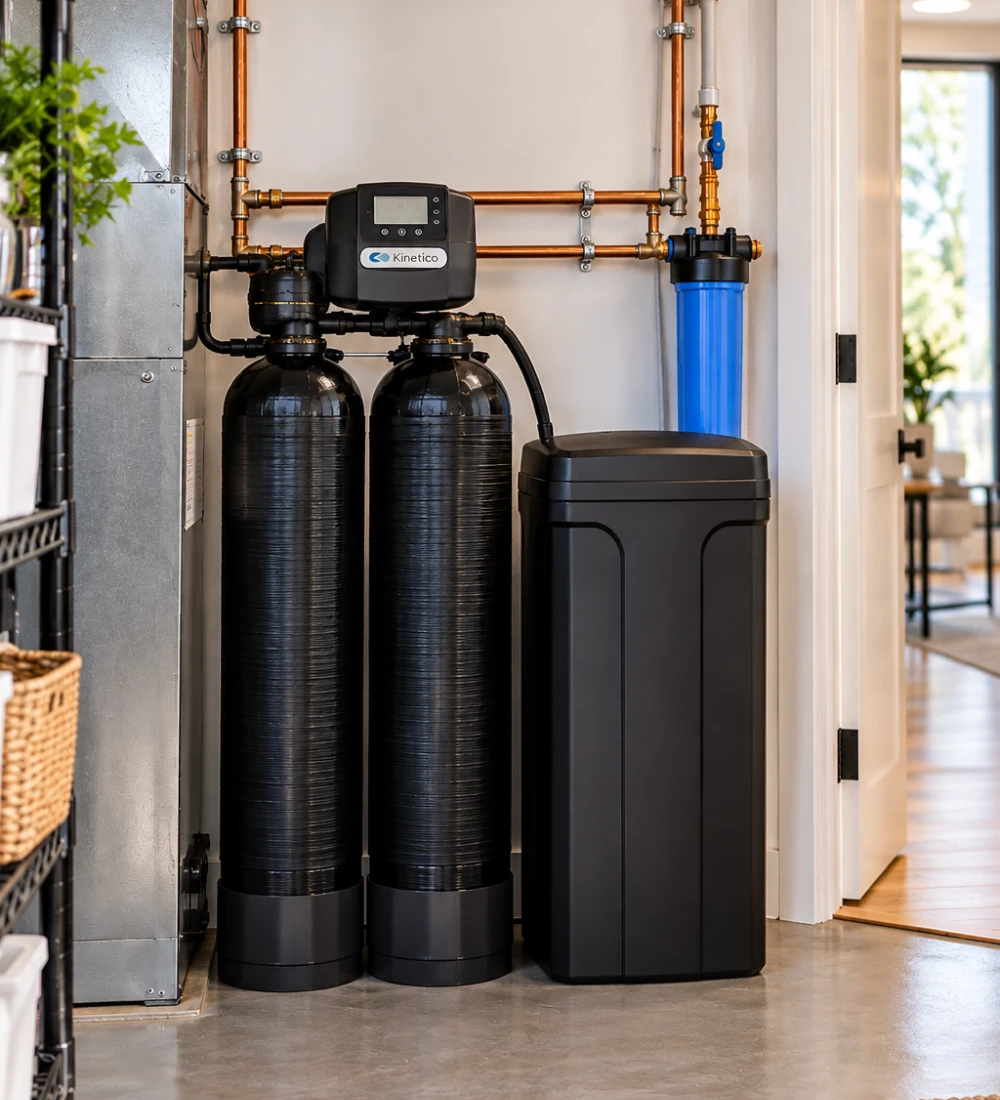
Whole-home water filtration system serving multiple fixtures in a home

Whole-Home Water Filtration

When a water problem affects more than one faucet, whole-home treatment may make more sense than treating a single sink.

A whole-home filtration system treats incoming water before it travels through the household plumbing.

Depending on the system, that can provide treated water for:

  • Showers and baths
  • Laundry
  • Water heaters
  • Plumbing fixtures
  • Dishwashing
  • Kitchen and bathroom faucets
  • Water-using appliances

Whole-home filtration may also help protect downstream treatment equipment when sediment or another condition needs to be addressed first.

Schedule a Water Test

How Chlorine Filtration Works

Activated carbon is commonly used for residential chlorine reduction. As water passes through the media, chlorine is reduced before the water continues through the home. The system still needs to be selected and sized correctly.

Performance can depend on:

  • Chlorine concentration
  • Type of disinfectant
  • Filtration media
  • Water flow
  • Contact time
  • Household demand
  • Water chemistry
  • Maintenance
Chlorine vs. chloramine

This Distinction Matters

Some municipal supplies use free chlorine. Others may use chloramine, formed by combining chlorine and ammonia. They do not necessarily require the same filtration strategy.

That is why noticing a “chlorine smell” is not enough to select equipment on its own. Your water provider’s Consumer Confidence Report can provide useful information about the public water supply, while home testing can help us evaluate your individual treatment needs.

Schedule a Water Test
Kitchen sink and drinking water in an Oklahoma City home
What you may notice

Signs Chlorine May Be Affecting Your Water

You may notice:

  • A chlorine-like smell from the faucet
  • Chlorine taste in drinking water
  • Stronger odor during showers
  • Unpleasant taste in coffee, tea, or ice
  • Water that simply does not taste as fresh as you would like

Sediment Filtration in Oklahoma City

Sediment is a general term for suspended particles in water. Depending on the source, it can include sand, silt, clay, dirt, rust particles, pipe scale, and other suspended material. Some sediment is easy to see. Finer material may simply make water look cloudy or gradually collect in fixtures and filters.

Where it can come from

Common Sediment Sources

Private Wells

Wells can carry naturally occurring sand, silt, clay, and other material from underground formations. A sudden increase in sediment can also indicate a change involving the well, pump, casing, or surrounding groundwater.

Municipal Water

Water-main work, construction, distribution-system changes, or infrastructure can sometimes contribute particles to the water reaching a home.

Household Plumbing

Rust, scale, corrosion, or aging plumbing components can introduce particles after the water has already entered the house.

What you may notice

Signs of a Sediment Problem

  • Grit in sinks or tubs
  • Cloudy water
  • Visible particles
  • Sediment settling in containers
  • Material collecting in toilet tanks
  • Clogged faucet aerators
  • Reduced flow
  • Clogged showerheads
  • Filters clogging unusually quickly
Whole-home sediment filtration equipment in a residential utility area
Treatment approach

How Sediment Filtration Works

Sediment filtration physically captures suspended particles. Filters are often described by micron rating, but a smaller micron number is not automatically better. A filter that is too fine can clog rapidly or unnecessarily restrict household flow. One that is too coarse may let the problem particles pass through.

Proper selection should consider:

  • Particle size
  • Amount of sediment
  • Household water use
  • Flow requirements
  • Water pressure
  • Filter capacity
  • Maintenance needs

That is why we match filtration to the actual sediment problem instead of simply choosing the finest filter available.

Schedule a Water Test

Iron Filtration in Oklahoma City

Iron can cause some of the most noticeable water problems in a home. Orange staining, metallic taste, discolored water, and rust-like deposits can all point toward iron. But iron treatment is not one-size-fits-all.

What you may notice

Signs You May Have Iron in Your Water

  • Orange or reddish-brown stains
  • Rust-colored toilets
  • Staining around sinks and tubs
  • Discolored water
  • Metallic taste
  • Staining on light-colored laundry
  • Rust-like particles
  • Buildup in fixtures
  • Water that starts clear and later turns orange or brown
Water chemistry

Not All Iron Is the Same

Ferrous Iron

Ferrous iron is dissolved in water. The water can look clear when it first leaves the faucet. After exposure to air, the iron can oxidize and form reddish or brown particles. Because it begins in dissolved form, an ordinary sediment filter may not solve the problem.

Ferric Iron

Ferric iron is already oxidized and exists as suspended particles. It may make water appear yellow, orange, reddish, or brown and can leave visible material behind.

Iron Bacteria

Iron bacteria are microorganisms that interact with iron and can create slime, deposits, staining, or odors. This condition is different from dissolved or particulate iron and needs to be identified before treatment is selected.

Whole-home iron filtration equipment in a residential utility area

How Iron Filtration Works

The correct treatment depends on the form of iron and the chemistry of the water.

Important factors can include:

  • Iron concentration
  • Type of iron
  • pH
  • Hardness
  • Manganese
  • Sulfur-related conditions
  • Dissolved oxygen
  • Sediment
  • Household flow

Testing first gives us the information needed to match treatment to the actual problem.

Sediment, Iron, Hardness, and Chlorine Are Different Problems

Similar-looking symptoms can lead homeowners toward the wrong equipment.

Sediment vs. iron

Not Every Particle Problem Is Sediment

A sediment filter captures suspended material and may catch some particulate iron. However, dissolved iron can pass through the filter because it has not yet formed particles large enough to trap.

If your water starts clear but later turns orange, develops discoloration, or leaves reddish stains on fixtures, the problem may be iron rather than sediment. Testing the water can help identify the cause and determine the appropriate treatment.

Filtration vs. softening

Hardness Needs a Different Approach

A water softener treats dissolved hardness minerals, primarily calcium and magnesium.

Hardness can cause:

  • White scale
  • Mineral buildup
  • Spots on dishes
  • Soap scum
  • Reduced soap performance

A sediment filter will not soften water, and a conventional water softener should not be assumed to solve chlorine or every iron problem.

Filtration vs. reverse osmosis

Whole-Home and Point-of-Use Treatment Serve Different Roles

Whole-home filtration and reverse osmosis serve different purposes. Whole-home filtration treats water before it moves throughout the house. Reverse osmosis provides point-of-use treatment, typically for drinking and cooking water.

One is not automatically better than the other. The right choice depends on what you want to treat and where you want to treat it.

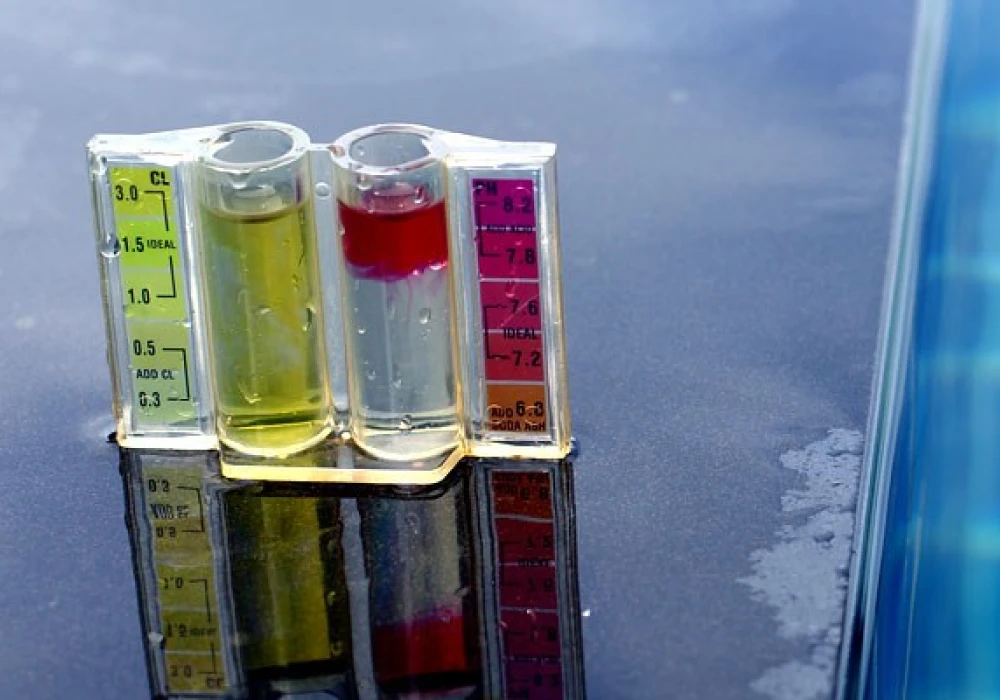
Water testing and filtration evaluation for a private well home

Why We Test Your Water First

Seeing the symptom is useful. Knowing the cause is better. Orange stains may suggest iron, but testing helps determine its form and concentration. Cloudy water may suggest sediment, but we still need to understand the source and particle load. A chlorine smell may point toward a disinfectant, but whether the water contains free chlorine or chloramine can change the treatment approach.

Depending on your concerns, an evaluation may consider factors such as:

  • Hardness
  • Iron
  • Manganese
  • pH
  • Chlorine
  • Sediment
  • Total dissolved solids
  • Water source
  • Other characteristics relevant to treatment

The goal is to avoid unnecessary equipment and recommend treatment based on evidence rather than assumptions.

Water Filtration for Private Wells

Private well water requires an individualized approach. Two nearby properties can have very different water conditions.

What may be present

Well Water Can Involve Different Conditions

  • Sediment
  • Iron
  • Manganese
  • Hardness
  • Sulfur-related odors
  • pH concerns
  • Other naturally occurring minerals
Important note

Treatment and Safety Testing Are Not the Same

A Kinetico of OKC water evaluation can help identify conditions that affect how your water looks, tastes, smells, and performs. However, treatment testing and drinking-water safety testing are not the same thing.

Private well owners should follow applicable Oklahoma and local recommendations for laboratory testing for bacteria, nitrate, and other contaminants of health concern. A conventional sediment, iron, or aesthetic filtration system should not be assumed to make microbiologically unsafe water safe to drink unless it is specifically designed and validated for that purpose.

Proper System Sizing Matters

A whole-home filter has to do more than treat the water. It also has to keep up with the household. If someone is showering while a washing machine fills and another faucet is running, the filtration system still needs to provide adequate flow.

System recommendations can therefore consider:

  • Household size
  • Number of bathrooms
  • Peak water demand
  • Plumbing size
  • Water pressure
  • Water-test results
  • Existing treatment equipment
  • Well and pump characteristics, when applicable

Proper sizing helps balance filtration performance with real-world household water use.

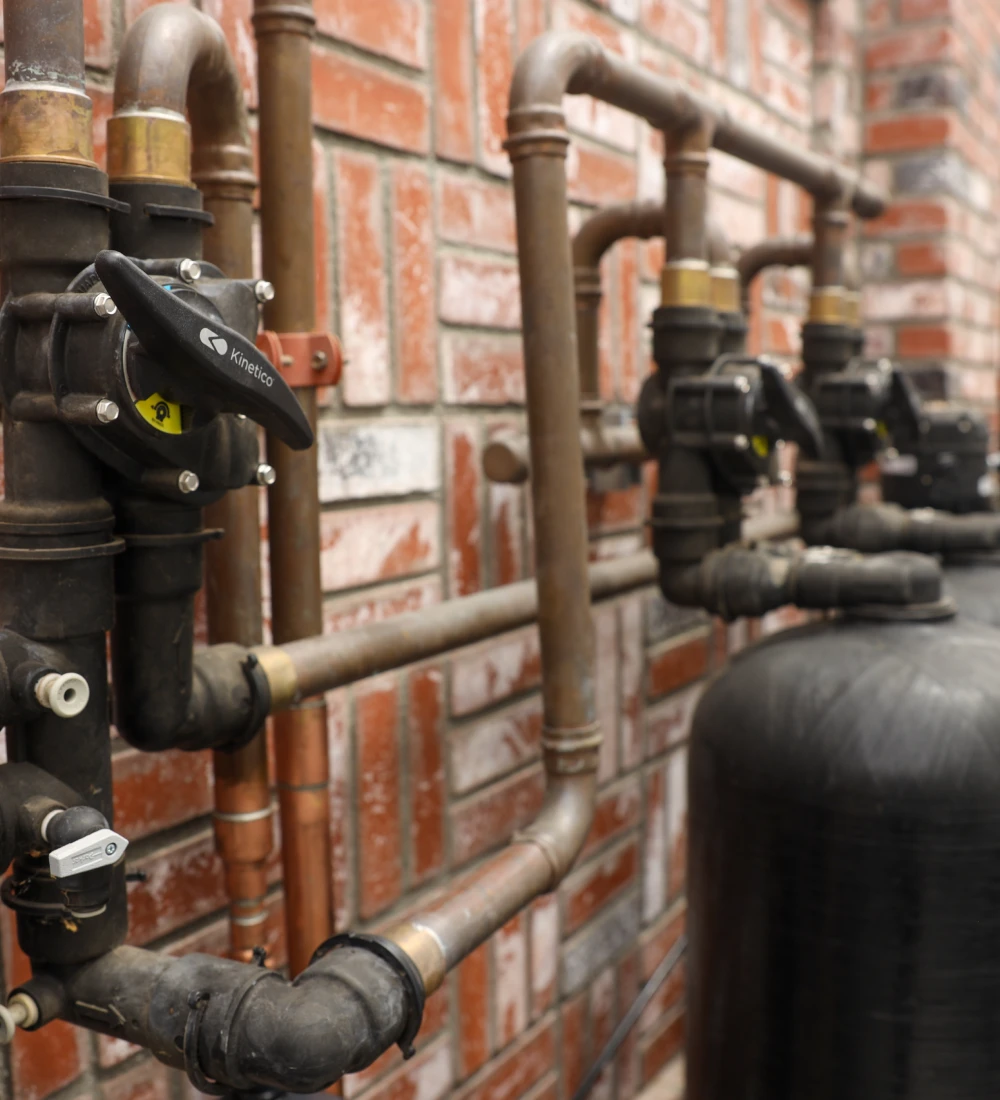
Whole-home water filtration equipment sized for household demand

Why Choose Kinetico of OKC?

Local Water Treatment Experience

Water conditions vary across Oklahoma City and Central Oklahoma, so we evaluate your home’s water before recommending treatment.

Treatment Based on the Problem

We identify the water problem first, then recommend treatment designed to address your specific needs.

Professional Installation

We properly size, configure, and install your system to work with your plumbing and existing equipment.

Ongoing Support

We provide local help with maintenance, filters, supplies, troubleshooting, and other system needs.

FROM TEST TO TREATMENT

How Our Water Filtration Process Works

1

Tell Us What You’re Seeing

Share the taste, odor, staining, particles, cloudiness, or other changes you have noticed.
2

Evaluate the Water

We look at the conditions relevant to your concern rather than assuming the symptom identifies the cause.
3

Explain What We Find

We walk through the results in straightforward language.
4

Match the Treatment

Depending on the water, that may include sediment filtration, chlorine filtration, iron treatment, softening, reverse osmosis, or a combination of technologies.
5

Size and Install the System

Whole-home equipment is selected around both treatment needs and household flow.
6

Get Ongoing Local Support

After installation, Kinetico of OKC remains available for maintenance, troubleshooting, and service.

Got questions?

Water Filtration FAQs

What type of water filter do I need?

It depends on what is actually in your water. Sediment, chlorine, iron, hardness, and other water concerns require different treatment technologies. Testing provides a better starting point than choosing a filter based only on symptoms.

Is a water filter the same as a water softener?

No. Filtration targets specific substances according to the filter technology. A water softener primarily treats dissolved hardness minerals such as calcium and magnesium.

Can a whole-home water filter reduce chlorine?

Yes, appropriate filtration such as activated carbon can be used for chlorine reduction. Treatment should account for whether the water contains free chlorine, chloramine, or another relevant condition.

What is the difference between chlorine and chloramine?

Chloramine is formed using chlorine and ammonia. It can require different filtration considerations from free chlorine, so identifying the disinfectant matters when choosing treatment.

Why is there sediment in my water?

Sediment can come from a private well, municipal distribution system, or household plumbing. Identifying the source helps determine the appropriate solution.

What micron sediment filter do I need?

There is no single micron rating that is right for every home. Filter selection depends on particle size, sediment load, flow requirements, pressure, and other conditions. Finer is not automatically better.

Does a sediment filter remove iron?

It can capture some particulate iron, but dissolved iron generally requires a different treatment approach.

Why does my water start clear and then turn orange?

Dissolved ferrous iron can initially appear clear. After exposure to oxygen, it can oxidize and create visible reddish or brown particles and staining

Will a water softener remove iron?

Some softening systems may reduce limited amounts of certain forms of dissolved iron under appropriate conditions. Significant iron problems or different forms of iron may require dedicated filtration.

Does a conventional water filter remove bacteria?

A conventional sediment or aesthetic filter should not be relied upon to make microbiologically unsafe water safe to drink. Private well owners should use appropriate laboratory testing and treatment designed for identified health-related contaminants.

Do I need whole-home filtration?

Whole-home treatment may be appropriate when the problem affects water throughout the house. If the concern is limited to drinking and cooking water, point-of-use treatment may be sufficient.

Should I test my water before buying a filtration system?

Yes. Testing helps identify the actual water condition and provides a stronger basis for choosing appropriate treatment than product features or symptoms alone.

Start With a Better Look at Your Water

You don’t need to diagnose the problem yourself. Tell us what you’re experiencing, and our local team will help you understand your water and the options available for your home.