
Reverse Osmosis Systems | Kinetico of OKC

Better Drinking Water Starts With the Water in Your Home

The water you use for drinking and cooking deserves a treatment solution designed around what’s actually in it.

While whole-home water softeners and filtration systems address water throughout the house, reverse osmosis (RO) systems provide advanced treatment specifically for drinking and cooking water. Reverse osmosis can reduce a broad range of dissolved substances that conventional filtration or water softening alone may not address.

At Kinetico of OKC, we help homeowners throughout Oklahoma City and Central Oklahoma understand their water and determine whether reverse osmosis is the right drinking-water solution for their household.

We start with the water—not the equipment.

What Is Reverse Osmosis?

Reverse osmosis is a water-treatment process that uses pressure to move water through a semi-permeable membrane.
How it works

Multi-Stage Drinking Water Treatment

The membrane allows water molecules to pass while rejecting many dissolved substances. Those substances are carried away in a separate waste stream rather than remaining in the treated drinking water.
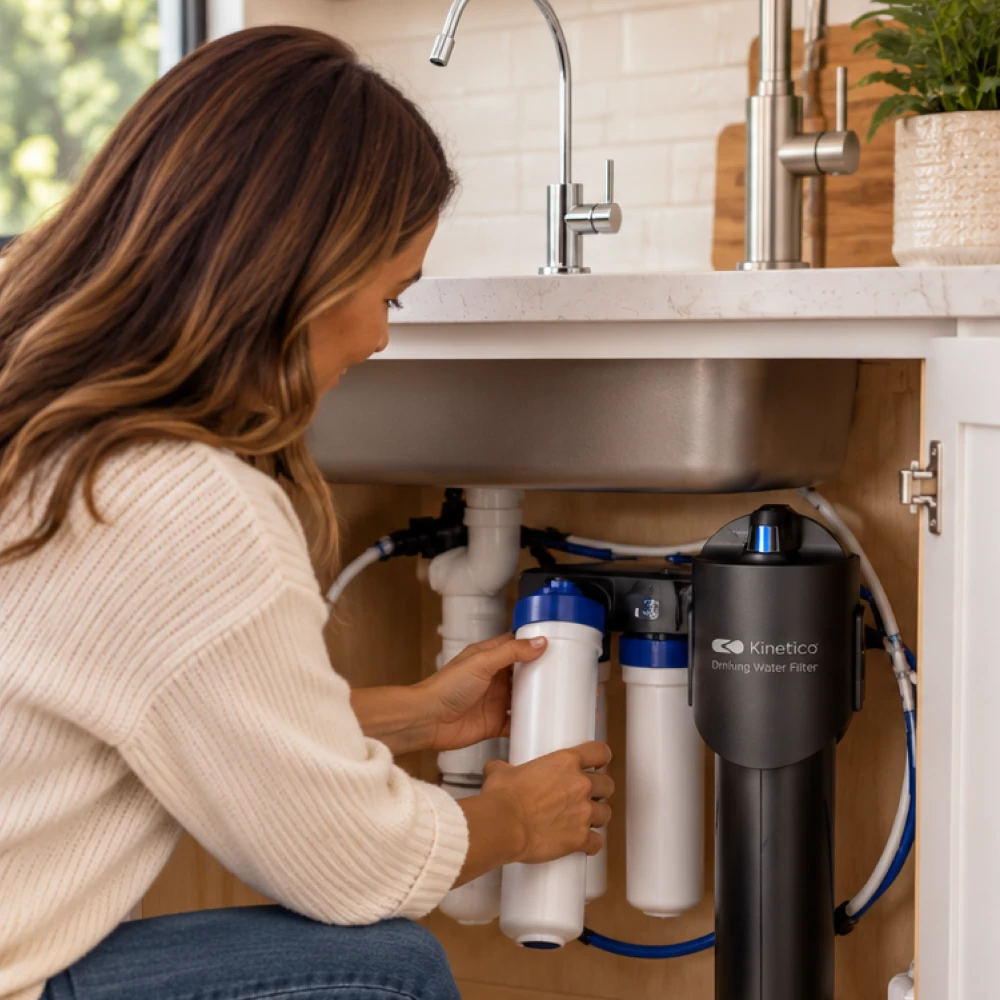
A complete Kinetico reverse osmosis system typically incorporates multiple treatment stages rather than relying on the membrane alone.
Depending on the specific system, these stages can include:
  • Prefiltration
  • Reverse osmosis membrane treatment
  • Postfiltration
  • Specialized treatment cartridges
  • Treated-water storage and dispensing
Each stage has a specific purpose.

What it can reduce

Reduction Depends on the Exact System

One reason homeowners choose reverse osmosis is its ability to reduce many dissolved substances.
Depending on the specific system, membrane, cartridges, water conditions, and certified performance claims, reverse osmosis technology may reduce substances such as:
  • Total dissolved solids (TDS)
  • Sodium
  • Chloride
  • Arsenic
  • Nitrate and nitrite
  • Other dissolved substances
  • Lead
  • Certain metals
Specific contaminant-reduction claims vary by product.
That’s an important distinction.
No water-treatment system should simply be described as “removing everything.” When a particular contaminant is a concern, Kinetico of OKC can help determine which system has the appropriate performance specifications and certifications.

Why Oklahoma City Homeowners Choose Reverse Osmosis

Water quality is not only about whether water meets regulatory requirements. Homeowners also care about how their water tastes and performs in daily life.
Where it helps

Common Drinking Water Uses

Homeowners often care about treated water quality when they are:
  • Filling a drinking glass
  • Making coffee or tea
  • Preparing baby formula
  • Cooking
  • Making soup
  • Preparing ice
  • Washing fruits and vegetables
  • Filling reusable water bottles
  • Giving water to pets
A properly selected RO system provides a dedicated source of treated water for these everyday uses.
For many families, that means having high-quality drinking water available directly from their kitchen rather than continually purchasing bottled water.
RO vs. ordinary filtration

Not All Filtered Water Is the Same

“Filtered water” and “reverse osmosis water” are not necessarily the same thing.
A conventional filter passes water through filtration media designed to reduce specific substances. For example, activated carbon is commonly used to address chlorine taste and odor.
Reverse osmosis goes further by using a semi-permeable membrane to separate many dissolved substances from the treated water.
That makes RO particularly useful when the treatment goal extends beyond taste and odor.
However, RO is not automatically better for every water problem.
A sediment problem affecting every fixture in the home should generally be addressed with appropriate whole-home sediment treatment. Hard water requires softening. Significant iron may require specialized filtration.
Reverse osmosis serves a different role: advanced treatment of water used primarily for drinking and cooking.

Reverse Osmosis vs. Water Softening

A reverse osmosis system and a water softener solve different problems.
Water softening

Whole-Home Hardness Treatment

A water softener primarily removes calcium and magnesium—the minerals responsible for hard water.
Softening helps address:
  • Scale
  • Water spots
  • Mineral buildup
  • Soap scum
  • Hardness deposits in water-using equipment
Reverse osmosis

Advanced Drinking Water Treatment

An RO system provides more advanced treatment for drinking and cooking water by reducing many dissolved substances through membrane separation.
For homes with both hard water and drinking-water concerns, the two technologies can work together rather than competing with one another.
Kinetico of OKC can evaluate the complete water picture and recommend the appropriate treatment sequence.
Why pretreatment matters
An RO membrane does not operate in isolation. Incoming water conditions can affect membrane performance and service life.
Factors such as:
  • Hardness
  • Chlorine or other disinfectants
  • Iron
  • Sediment
  • pH
  • Total dissolved solids
  • Other water characteristics
may influence how the system should be configured.
That is another reason Kinetico of OKC evaluates the water before recommending equipment.
If the home’s water requires pretreatment, addressing that condition can help the RO system operate as intended.
Kinetico drinking-water systems

Kinetico’s Non-Electric Approach to Drinking Water

One of Kinetico’s distinguishing characteristics is its approach to water treatment without unnecessary electrical components.
Applicable Kinetico drinking-water systems are designed to operate using household water pressure rather than electricity for normal RO production.
That simplifies operation and allows the treatment process to respond naturally when water is needed.
The exact features vary by Kinetico model, which is why the individual product pages should be consulted when comparing systems.
Municipal water

Reverse Osmosis for Municipal Water

Homes connected to municipal water can still benefit from point-of-use drinking-water treatment.
Public water systems disinfect and monitor water according to regulatory requirements, but homeowners may want additional treatment for specific substances or simply prefer the taste of RO-treated water.
Municipal water customers can also review their water provider’s current Consumer Confidence Report (CCR) for information about the public water supply.
Kinetico of OKC can then evaluate the water reaching your home and help determine whether additional drinking-water treatment makes sense for your goals.
Private well water

Reverse Osmosis for Private Well Water

Private well water requires a different approach.
Water chemistry can vary considerably between individual wells—even between properties located relatively close to one another.
Well water may contain conditions involving:
  • Hardness
  • Iron
  • Manganese
  • Sediment
  • Total dissolved solids
  • Nitrate
  • Other naturally occurring substances
Testing becomes especially important before choosing an RO system.
Private well owners should also maintain appropriate laboratory testing for bacteria, nitrate, and other health-related contaminants according to applicable Oklahoma and local recommendations.
An RO system should only be relied upon for specific contaminant reduction when the exact system is designed, operated, maintained, and appropriately certified or validated for that purpose.
Understanding TDS

What Total Dissolved Solids Actually Tells You

Total dissolved solids (TDS) is a measurement of the amount of dissolved material in water.
That can include minerals, salts, and other dissolved substances.
Reverse osmosis is effective at reducing TDS, which is one reason a TDS meter is sometimes used to help evaluate RO performance.
But TDS alone does not tell you whether water is safe or unsafe.
Two water samples with the same TDS reading can contain very different dissolved substances.
That is why a TDS reading should be treated as one piece of information—not as a substitute for appropriate contaminant-specific testing.

Kinetico Reverse Osmosis Options

Kinetico offers several drinking-water treatment solutions for different households and treatment goals.
Advanced customizable RO

K5 Drinking Water Station®

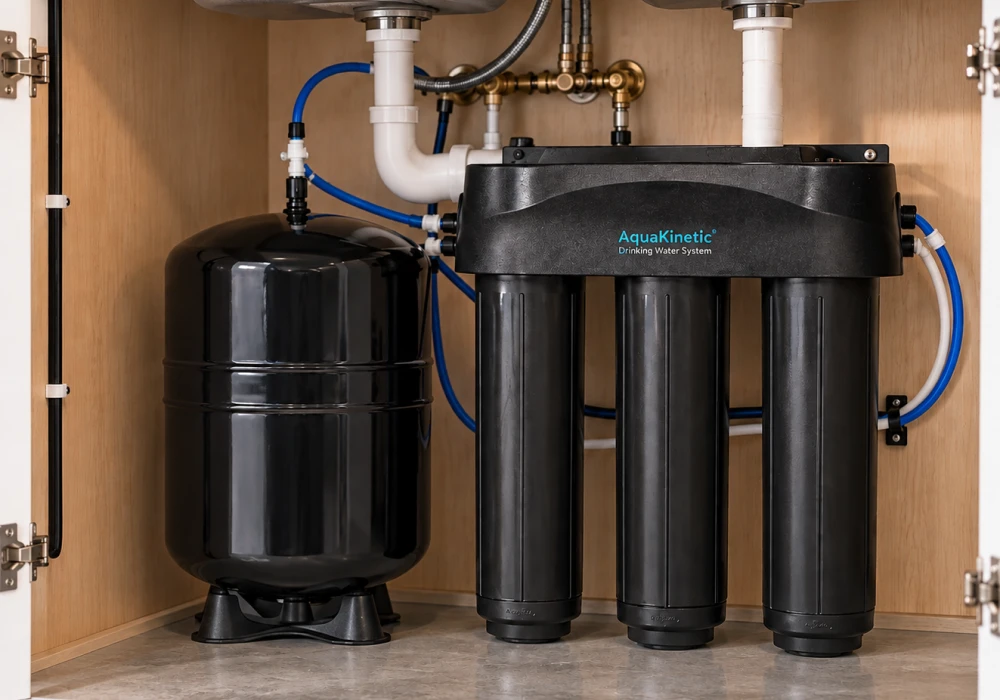
The Kinetico K5 Drinking Water Station is an advanced customizable drinking-water system built around reverse osmosis technology.
Its modular design allows additional treatment cartridges to be selected for specific water-quality goals.
Tankless RO Option

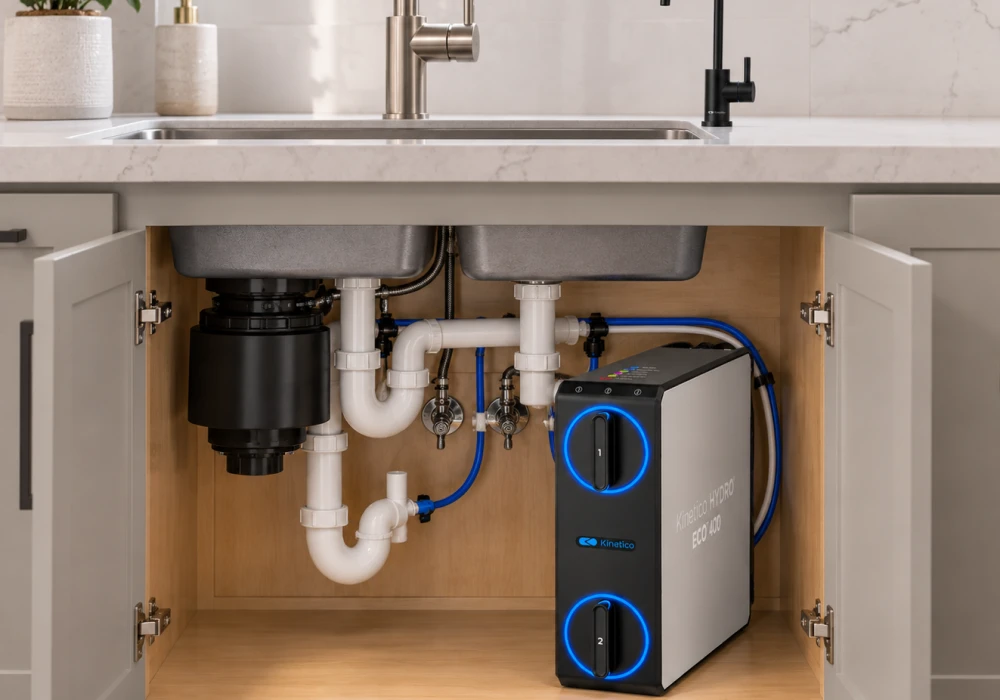
Hydro Eco

The Kinetico Hydro Eco offers another drinking-water treatment option for homeowners seeking high-quality tankless RO water from a system tailored to their household’s needs.
Compact point-of-use RO

A200

The Kinetico A200 offers reverse osmosis drinking-water treatment in a compact system designed for point-of-use installation.
Point-of-use drinking water

MACguard®

The Kinetico MACguard provides another Kinetico drinking-water solution designed to deliver treated water conveniently at the point of use.
Choosing the right fit

Which Reverse Osmosis System Is Right for Me?

There is not one RO system that is automatically right for every Oklahoma household.
The best choice depends on several factors:
  • Your water source
  • Water-test results
  • Specific substances you want to reduce
  • Household drinking-water consumption
  • Available installation space
  • Existing whole-home treatment
  • Desired system features
  • Maintenance preferences
Kinetico of OKC can compare those factors with the capabilities of available systems and recommend an appropriate solution.

Why the Right RO System Is More Than the Equipment

Independently Certified Performance

Independent organizations such as NSF and the Water Quality Association (WQA) evaluate drinking-water treatment products against established standards. This helps homeowners verify specific performance and contaminant-reduction claims.

Certification Is System-Specific

Certifications apply to specific systems, components, contaminants, and operating conditions. A claim for one product should not automatically be applied to every system in a manufacturer’s lineup.

Choosing the Right RO System

We help you review the performance information for the specific reverse osmosis system you’re considering. This is especially important when you want to address a particular contaminant.

Regular System Maintenance

Filters, specialty cartridges, and RO membranes require periodic maintenance. Replacement schedules depend on your water quality, household use, system design, and manufacturer recommendations.

Local Water Expertise

Water conditions can vary across Oklahoma City, surrounding communities, and private wells. We consider your water source, water conditions, and treatment goals before recommending a system.

Professional Installation & Support

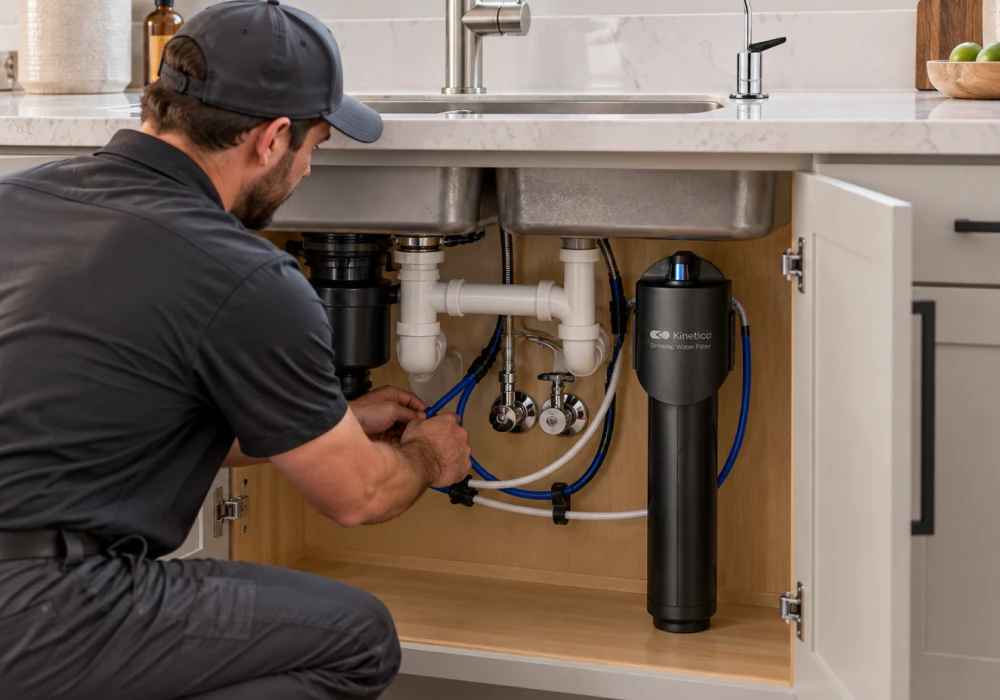
We properly install and configure your drinking-water system, then provide ongoing local help with filters, maintenance, troubleshooting, and service.

Got questions?

Frequently Asked Questions About Reverse Osmosis

Is reverse osmosis better than a regular water filter?

It depends on what you need to treat. Carbon and other filters are excellent for specific filtration applications, while reverse osmosis can reduce many dissolved substances that conventional filtration doesn't address. Testing and treatment goals should determine the technology.

Does reverse osmosis remove hard water?

RO can reduce dissolved minerals at the treated drinking-water faucet, but it isn't a substitute for a whole-home water softener when hardness is affecting plumbing, showers, appliances, and fixtures throughout the house.

Does reverse osmosis reduce sodium?

RO technology can reduce sodium and many other dissolved ions. Specific performance depends on the system and operating conditions.

Does reverse osmosis remove lead?

Certain certified RO systems can reduce lead. When lead is a specific concern, choose a system with an applicable verified reduction claim rather than assuming every RO system provides identical performance.

Does reverse osmosis remove arsenic?

Certain RO systems can reduce particular forms of arsenic under specified conditions. Arsenic treatment requires appropriate testing and careful system selection because performance depends on factors including arsenic species and water chemistry.

Does reverse osmosis remove bacteria?

Don't assume a conventional residential RO system makes microbiologically unsafe source water safe. Private well owners should conduct appropriate laboratory testing and use treatment specifically designed for identified microbial concerns.

Does RO water contain minerals?

Reverse osmosis reduces many dissolved minerals along with other dissolved substances. Mineral content after treatment depends on the incoming water and the performance of the specific system.

Do Kinetico RO systems need maintenance?

Yes. Filters, specialty cartridges, and membranes require periodic service or replacement according to the requirements of the specific system.

Should I test my water before buying an RO system?

Yes—particularly when you're trying to address a specific contaminant rather than simply improving drinking-water taste. Testing provides a factual basis for selecting treatment.

Better Drinking Water Starts With the Right Solution

Start with what you want to improve about your water. Kinetico of OKC will evaluate your water, explain your options, and recommend a drinking-water system that fits your home and treatment goals.

From selection and installation to ongoing service, our local team is here to help.